Suburban properties across Fulton Ranch and Warner Ranch often face chemical-resistant bed bug strains that survive traditional retail sprays and low-dose liquid residuals. Bed bug high-thermal remediation works by…
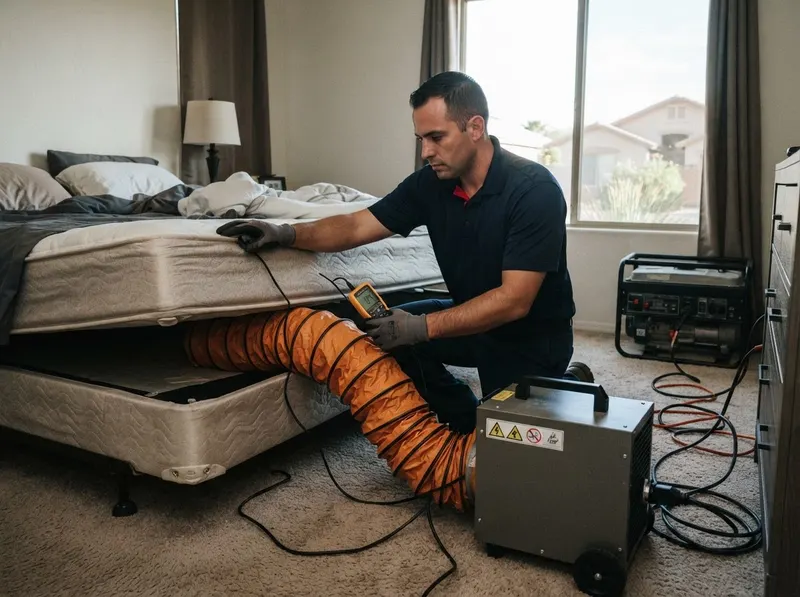
Suburban properties across Fulton Ranch and Warner Ranch often face chemical-resistant bed bug strains that survive traditional retail sprays and low-dose liquid residuals. Bed bug high-thermal remediation works by circulating dry, high-temperature air throughout the entire structure. Specialized mobile generators power industrial electric or indirect-fired heating units that elevate the ambient indoor temperature past the lethal thermal death point of 120°F. Maintaining the core temperatures between 122°F and 135°F for a continuous 4-hour soak window denatures insect proteins and dehydrates dormant eggs hidden inside mattress seams, nightstands, and drywall crevices. Unlike standard extermination methods that require weeks of repeat applications, high-thermal processing eradicates the infestation across carpet tacks and wall outlets in a single coordinated intervention.
Selecting structural thermal remediation avoids the recurring exposure of liquid chemical applications in homes with crawling infants or indoor pets. A traditional chemical-only spray requires multiple visits spaced 14 days apart to target freshly hatched nymphs, whereas heat treatment penetrates directly into heavy foam mattresses, dressers, and behind baseboard cavities where liquid droplets cannot reach. The necessary operational trade-off requires meticulous homeowner preparation: melting risks require the temporary removal of candles, crayons, vinyl window blinds, cosmetics, and aerosol pressurized cans prior to equipment staging. If an infestation is isolated to a standalone detached casita or single guest bedroom, targeted localized chemical dusting provides a lower upfront expense, but whole-home thermal remediation remains the definitive procedure to prevent colony dispersal through common ventilation shafts.
Structural dynamics in East Valley neighborhoods like Ocotillo and Circle G at Riggs Homestead feature deep stucco expansion joints and multi-zone heating and cooling systems that allow pests to migrate between living quarters. During the remediation process, licensed technicians deploy calibrated wireless thermocouple probes in the coldest sub-floor pockets, closet recesses, and interior partition walls to guarantee that zero thermal cold zones remain below 120°F. High-velocity axial air movers force superheated air into framing voids, eliminating the harborages where pests retreat. Following the sustained bake cycle, technicians install exclusionary perimeter dust barriers using pharmaceutical-grade amorphous silica around electrical junction boxes and baseboards to stop any reintroduction from external luggage or shared travel gear.
Every job gets a firm, written price after a free on-site visit.
Tell us about your bed bug high-thermal thermal remediation job in Chandler and we'll send a clear, written quote, usually the same day.
 Iron Mesa Pest Control